
The Pilgrims’ Narrative Fellowship
The Canterbury TalesThis flow traces how a mixed company forms a temporary community whose journey becomes an organized contest of stories.
increasing Bearing strength in each event
 decreasing
Bearing strength in each eventdecreasingSpringtime Departure
Springtime Departure
Seasonal Impulse
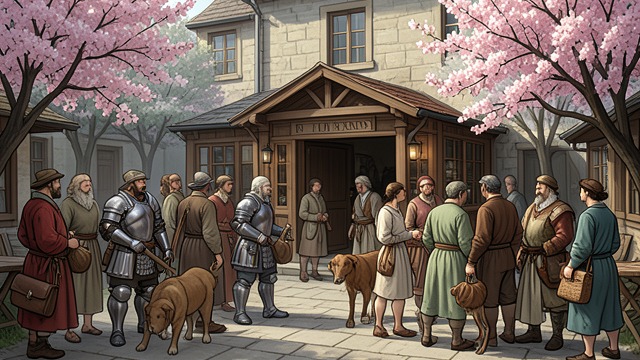
The renewal of April turns travel into a collective desire. Pilgrimage appears as both religious aspiration and social escape.
Gathering at The Tabard
At Southwark, strangers become companions through shared lodging, supper, and expectation. Their varied ranks make the company a miniature society before any tale begins.
Host’s Proposal
Host’s Proposal
A Game for the Road
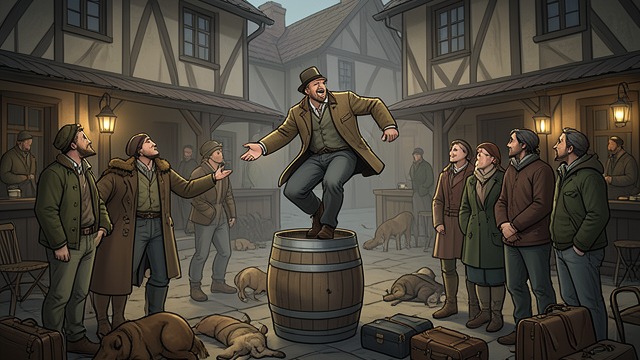
Harry Bailly proposes storytelling to prevent silence and boredom. His plan converts travel time into a public performance.
Authority by Consent
The pilgrims accept his rules and make him judge. The contest therefore rests on voluntary agreement, but it also creates rivalry within the fellowship.
The First Drawing
The First Drawing
Chance and Order
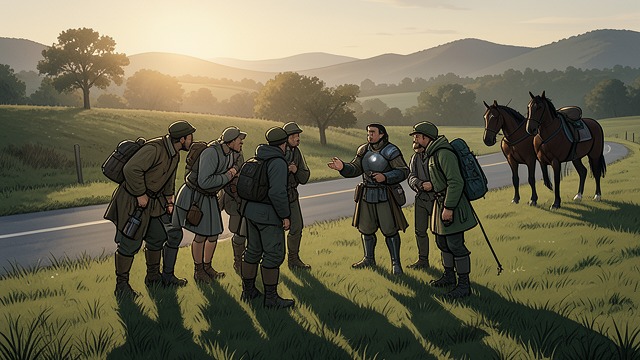
The lots determine that The Knight will speak first. Chance gives the company a sequence and turns an unstructured journey into a narrative procession.
The Company Listens
The first tale carries the authority of chivalric seriousness. The pilgrims’ willingness to listen establishes storytelling as their shared civic ritual.
Changing Voices
Changing Voices
From Romance to Satire
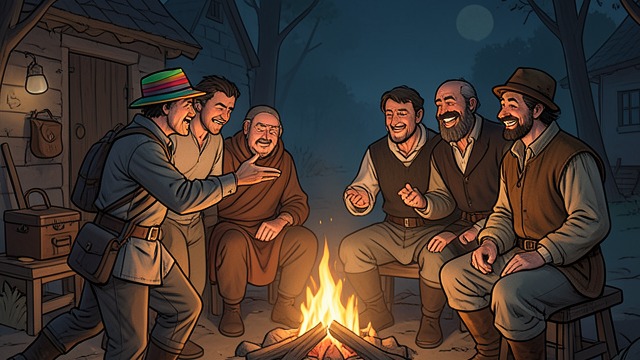
Later narrators answer the tone of earlier tales with comedy, moral attack, or confession. The contest becomes a dialogue rather than a simple succession.
Social Friction
The speakers repeatedly judge one another while pretending to entertain. Their stories expose rival ideas of class, religion, marriage, and authority.
Unfinished Road

Unfinished Road
No Final Winner
The surviving sequence ends before the planned return journey and final supper. The contest remains open rather than resolving into a single authoritative moral.
Narrative Continuation
The company’s road continues imaginatively beyond the text. Its unfinished structure preserves the tension among incompatible voices.
April opening
The first night at The Tabard
Morning after the inn supper
After The Knight’s Tale
Near the final recorded tale
